Business Intelligence / Data · Professional consulting
CNH Industrial
A Business Intelligence project that evolved toward a more organized data architecture as sources and analytical needs grew.
α
Context
The Quality Manager needed to consolidate an already-defined set of manufacturing indicators in Power BI for heavy industrial machinery.
The initial scope was primarily Business Intelligence: bringing Quality information together and presenting it consistently for management.
β
Problem
The indicators were already defined, but the required information was distributed across files and poorly standardized structures.
As sources, indicators and analytical needs grew, maintaining each dashboard directly from individual files began creating consistency and scalability problems.
γ
Initial delivery
I worked directly with the Quality Manager, who defined management needs and identified the owners of each information source.
I received the data, understood its structure, corrected inconsistencies and transformed it into models suitable for Power BI.
I developed dedicated dashboards and an executive view that consolidated the main indicators.
δ
Solution evolution
As information volume grew, treating each dashboard as an isolated solution stopped being sustainable.
I established a lightweight methodology to structure incoming sources and improve how information was delivered and processed.
Within the Microsoft ecosystem, shared storage was introduced and OneLake was later used to centralize information.
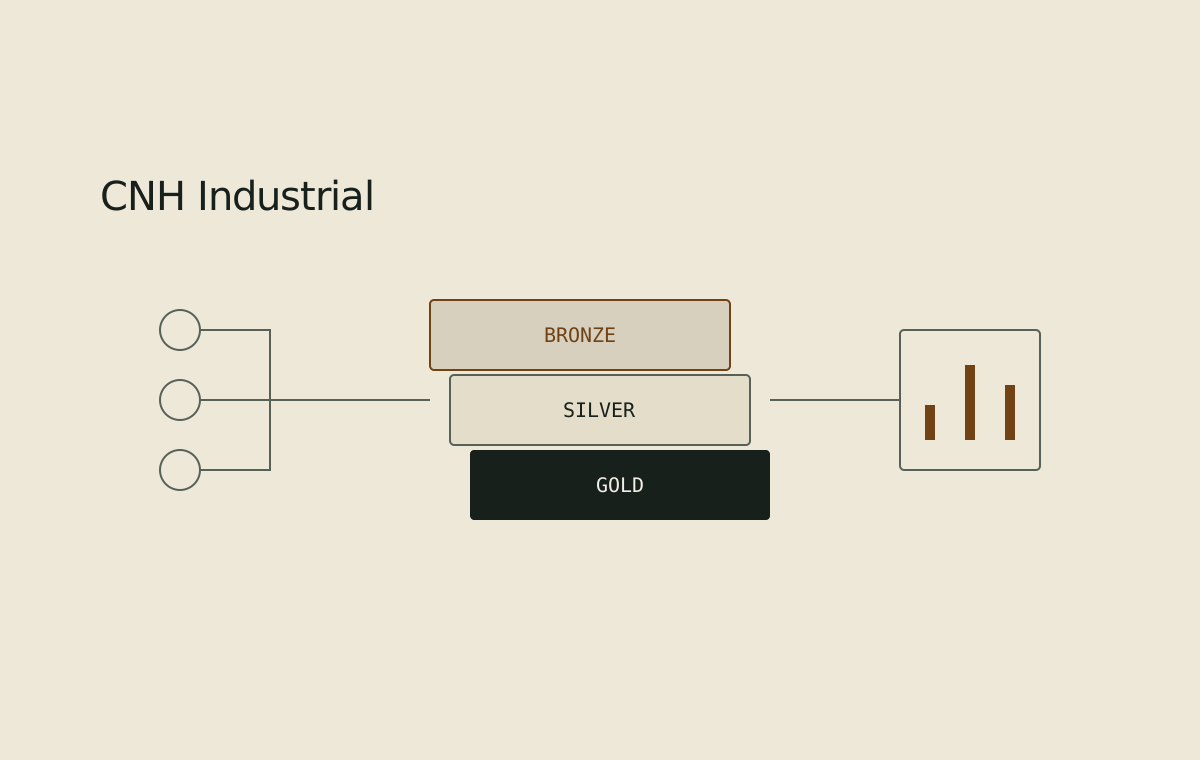
On top of that foundation, I designed a Medallion architecture that separated data according to processing stage and readiness for consumption.
ε
Reporting
The consumption layer remained in Power BI.
In addition to dedicated dashboards, I built a consolidated reporting solution capable of presenting the main indicators and moving toward different levels of analysis.
- Distributed sources
- Structuring and normalization
- OneLake
- Medallion architecture
- Data models
- Power BI
ζ
Result
The project evolved from individual BI developments into a more organized data and reporting structure.
- Previously fragmented information consolidated
- Greater consistency across sources
- Recurring update cadence
- Reduced dependence on inconsistent manual structures
- Shared executive view
- Dedicated views for specific Quality needs